Introduction
Embedded Systems / Cyber-Physical System Fundamentals (ES/CPSF)
Winter Semester 2026/27


Embedded Systems (ES) / Cyber-Physical System Fundamentals (CPSF)
- Computing inside products, infrastructure, and physical processes
- Chapter 1 of Marwedel: terms, opportunities, challenges, common characteristics, design flows
- Running question: How do we build trustworthy software-controlled physical systems?
Code of Conduct
- At the Faculty of Computer Science, we promote a motivating and equal opportunity environment in which we learn, teach, and research together.
- Discrimination and sexual violence are not tolerated, vigorously prosecuted, and sanctioned to the fullest extent of the law.
- Unacceptable behavior includes, but is not limited to, harassing, abusive, discriminatory, intimidating, derogatory, and degrading behavior and language.

Cyber-Physical Systems
Lee: Cyber-physical systems are integrations of computation and physical processes.
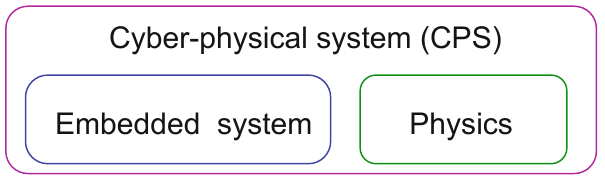
- Cyber: computation, models, communication, data
- Physical: time, energy, space, motion, heat, uncertainty
- System: behavior emerges from the interaction, not from software alone
Working model for this course: CPS = embedded system + physical environment.
Communication Completes the Picture
The Book’s View
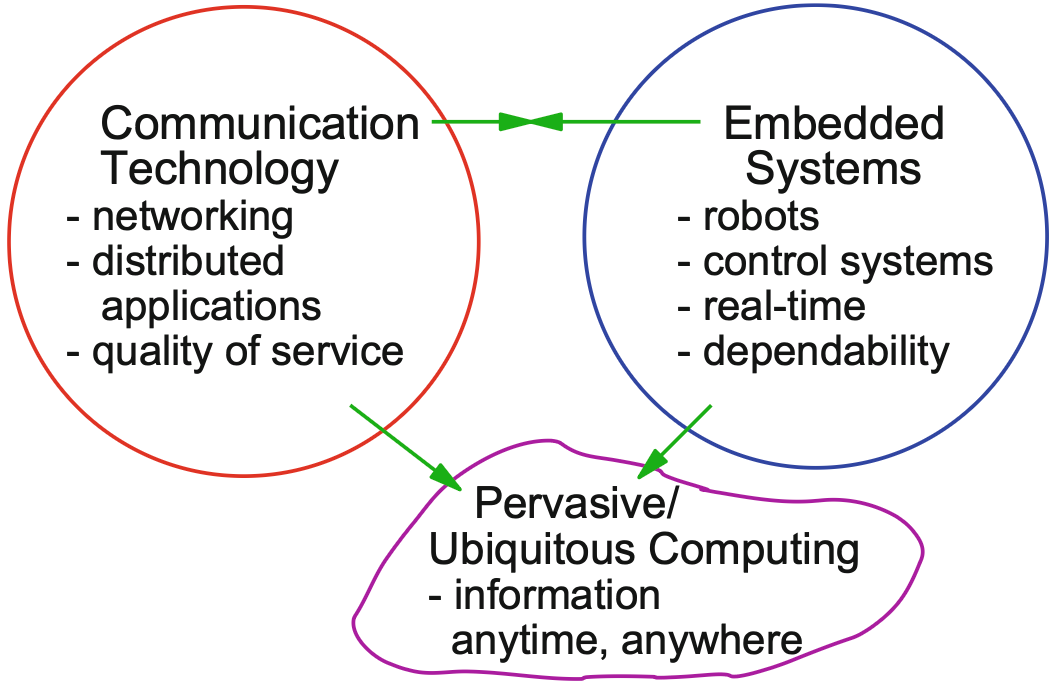
- CPS definitions often stress physics
- IoT definitions make communication explicit
- Real deployed systems need both
- The boundary between CPS and IoT is often pragmatic
Control in Engineered Products
Why the Examples Matter
- Many functions depend on sensing, control, and actuation
- Dependability and timing affect safety directly
- Modern mobility adds autonomy, connectivity, and software updates
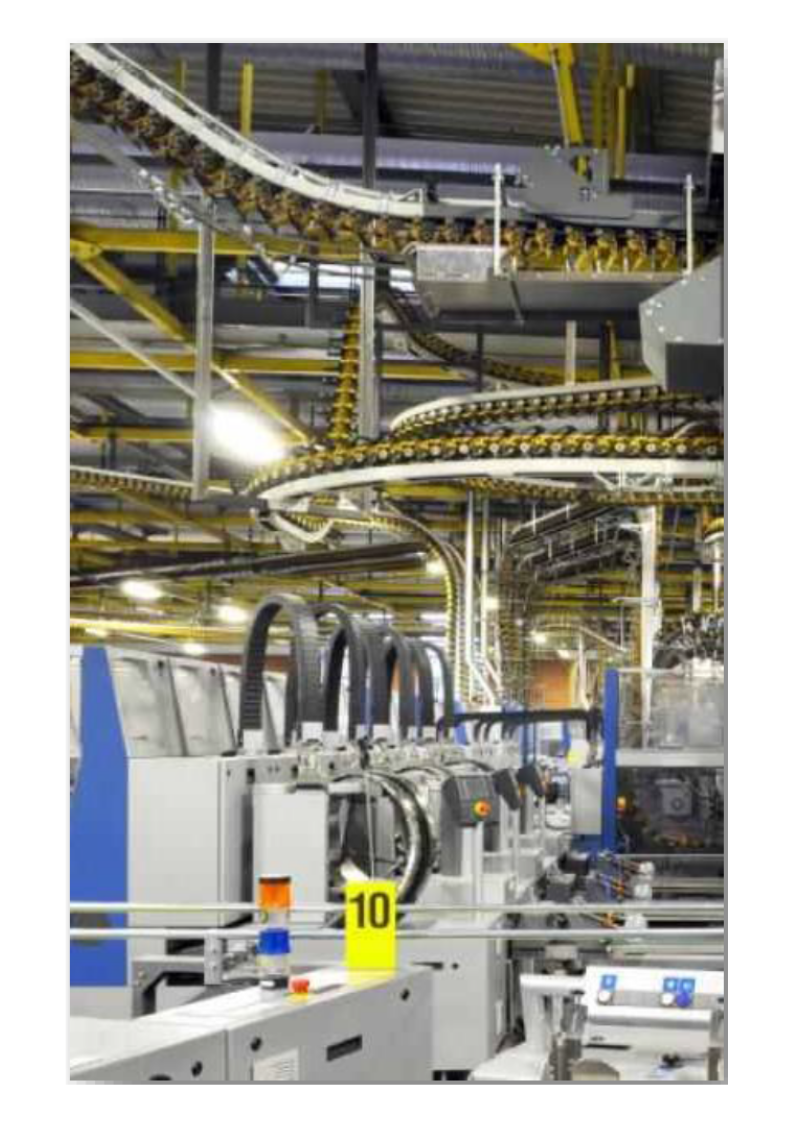
- Production systems connect planning, operation, and maintenance



Physical Contexts and Embodiment
Physical Context Matters
- Dams, bridges, mountains, and volcanoes are monitored before failures become visible
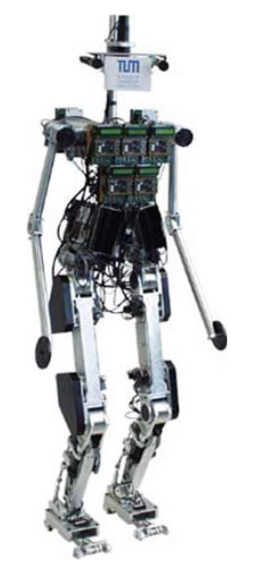
- Robots combine mechanics, control, sensing, actuation, and software
- CPS design often starts with the environment, not with the processor

Efficiency Is Multidimensional
Not Just Faster
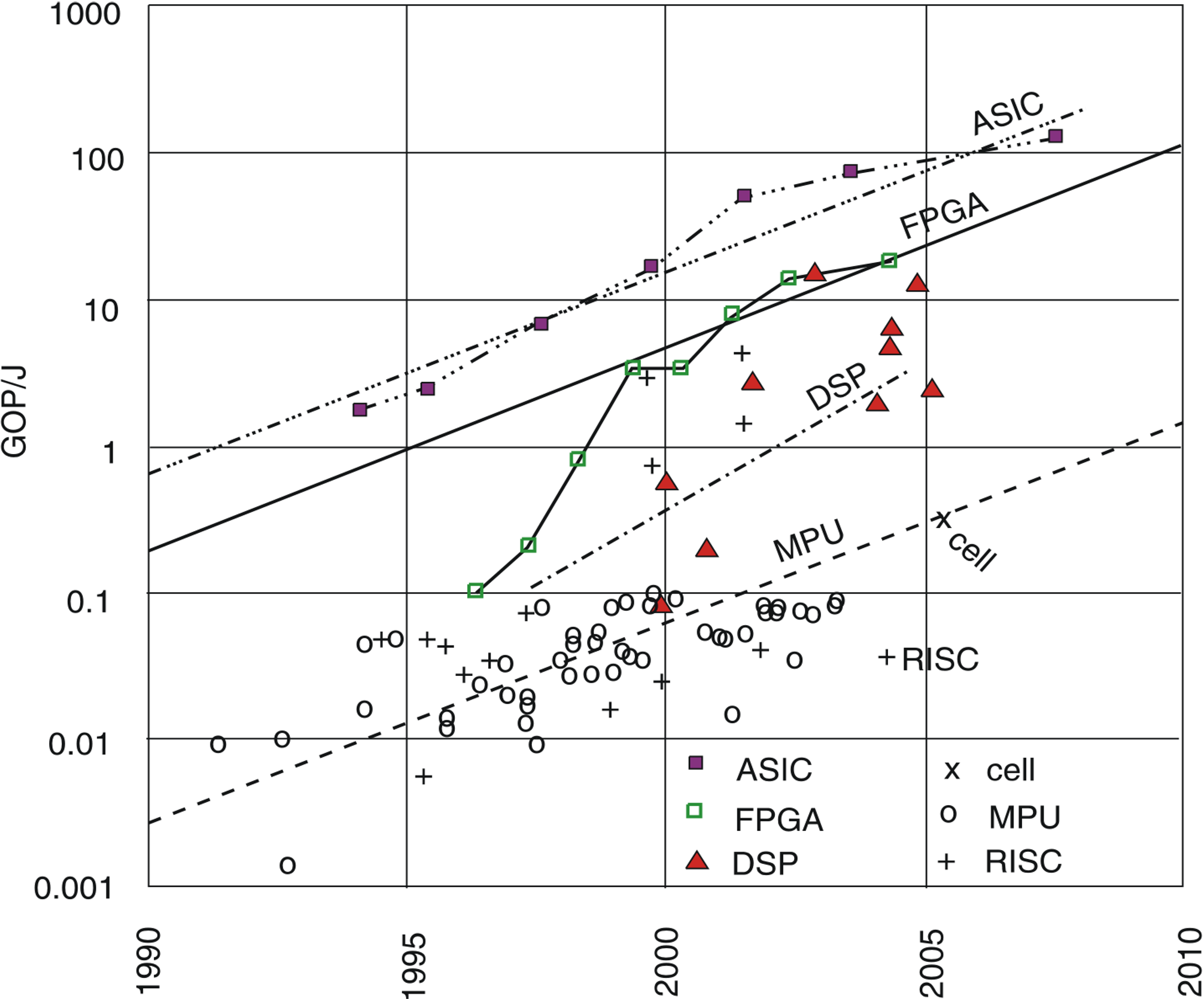
- Energy per operation shapes architecture choices
- Memory footprint, weight, heat, and unit cost matter
- Flexibility has a price: software on general-purpose processors is not always affordable
- Efficient software design remains necessary even when hardware improves
The Space of Design
The Interesting Region
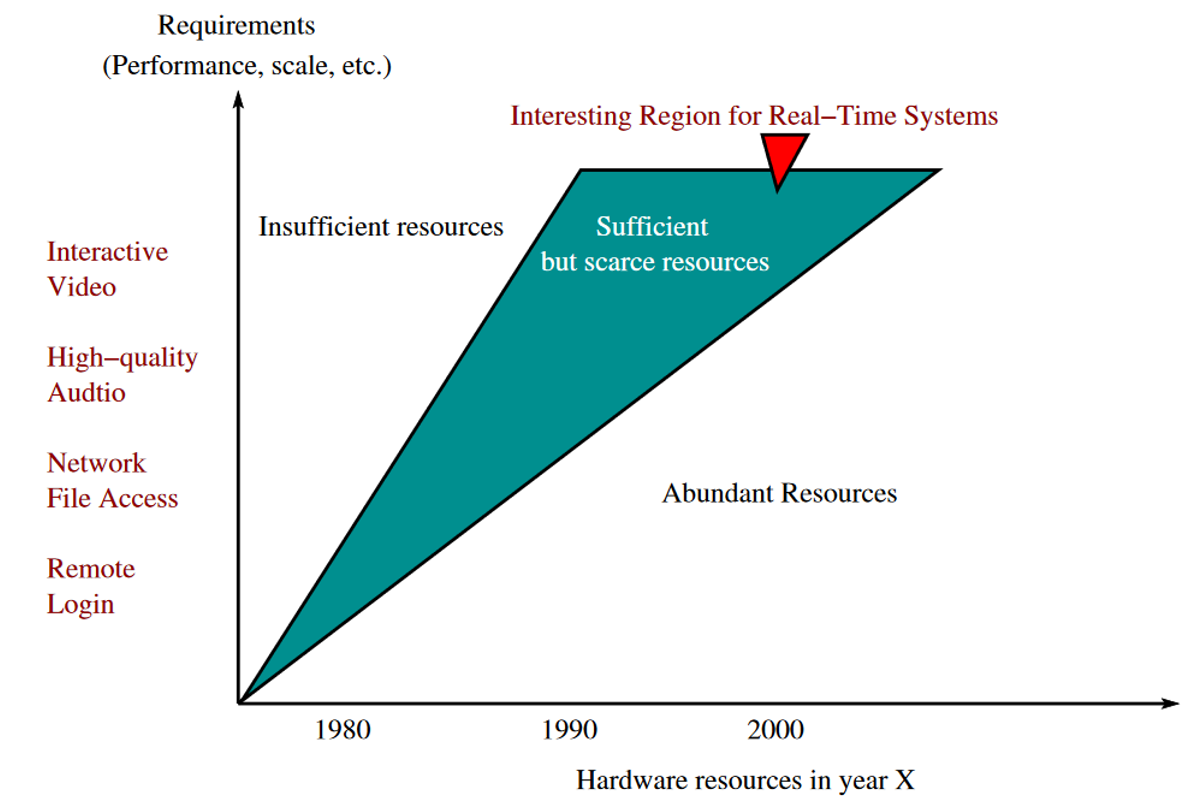
- Too few resources: requirements cannot be met
- Too many resources: product becomes too costly, heavy, hot, or energy hungry
- Real-time design often lives in the sufficient but scarce region
The goal is not one maximal metric, but a feasible trade-off.
Closed-Loop Embedded Control
A Typical CPS Loop
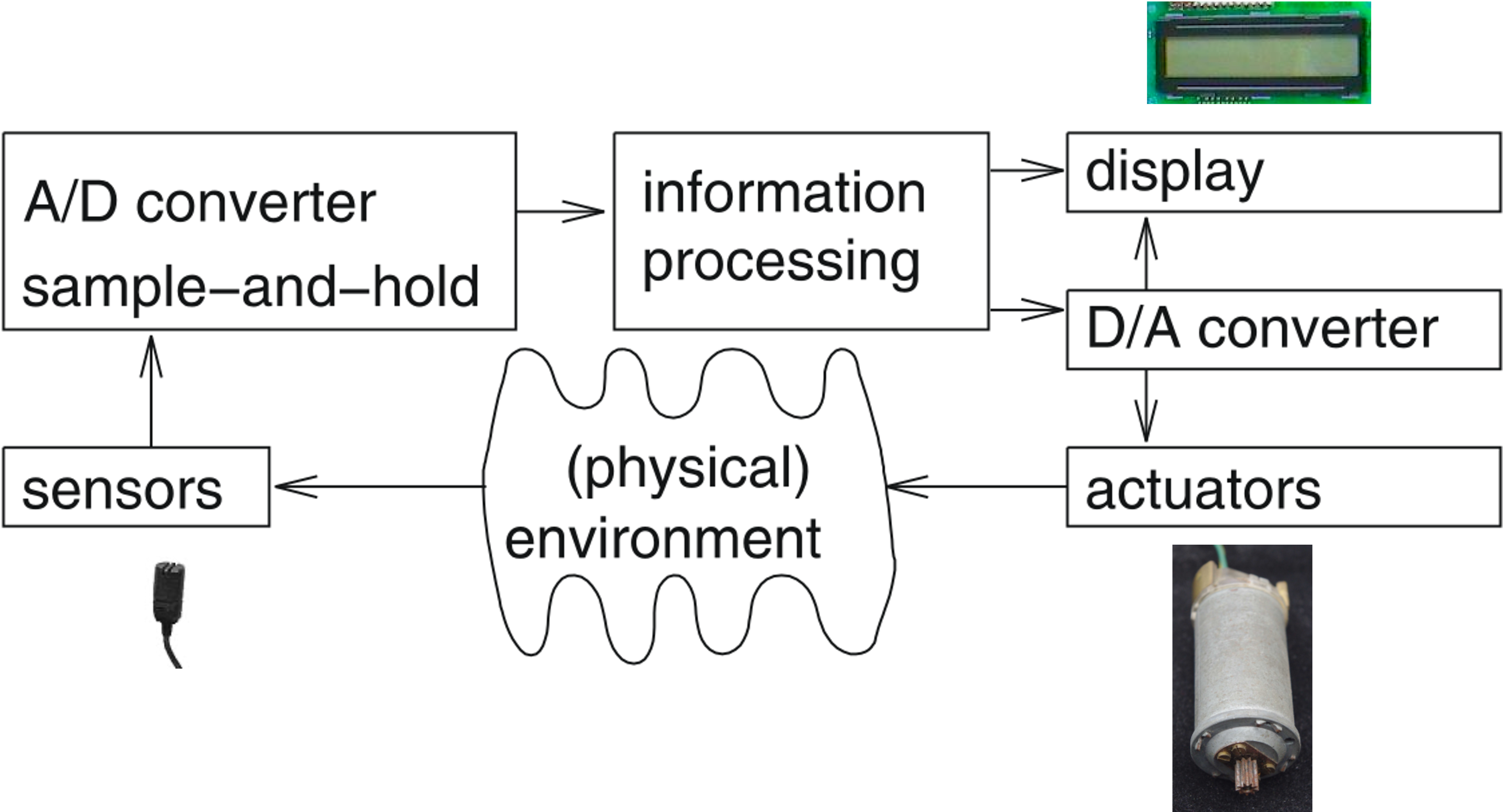
- Sensors observe physical quantities
- A/D conversion samples and quantizes them
- Software computes a reaction
- D/A conversion and actuators influence the environment
- Displays and communication expose state to humans or other systems
Real-Time Constraints

What Makes It Real-Time?
- A guaranteed response must be argued without statistical averages
- The environment dictates the time interval
- In hard real-time systems, a missed deadline can be catastrophic
- Soft deadlines degrade service quality rather than causing system failure
Correct value + wrong time = wrong behavior.
Where This Course Fits
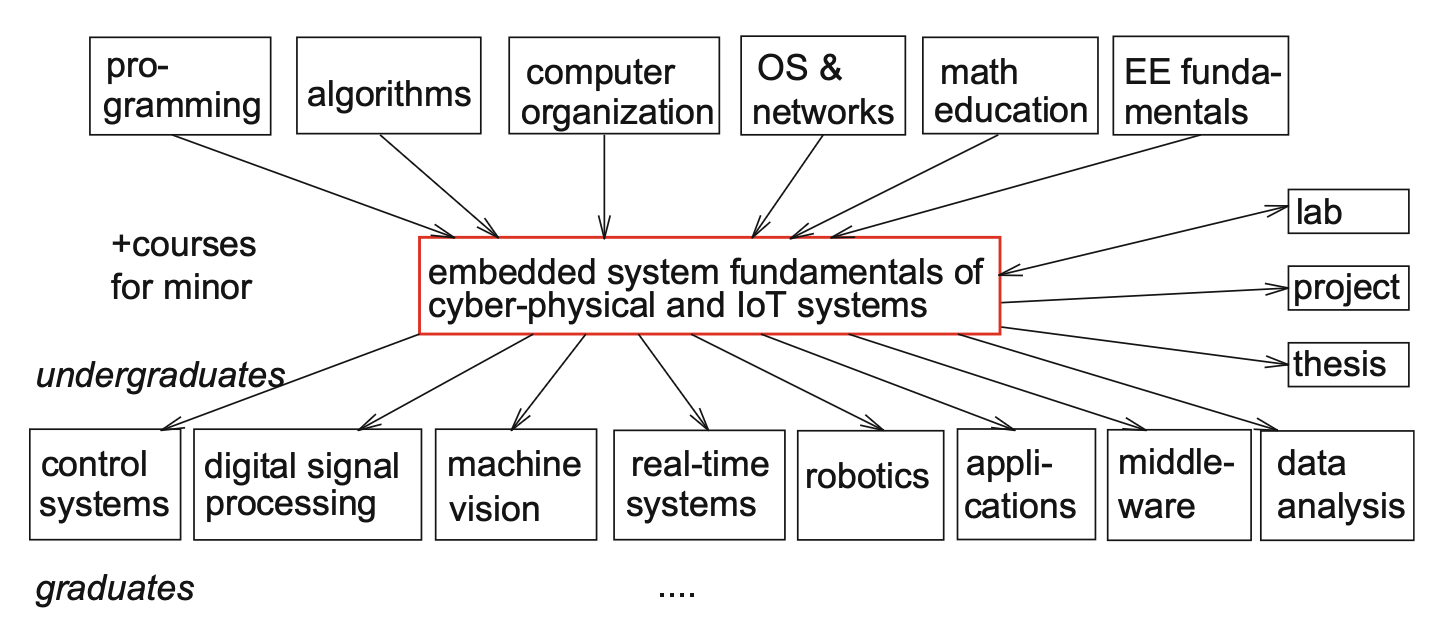
Bridge Course
- Uses programming, algorithms, computer organization, operating systems, networks, and mathematics
- Prepares for real-time systems, robotics, DSP, machine vision, middleware, security, and data analysis
- Connects software techniques with physical and resource constraints
Generic Design Flow
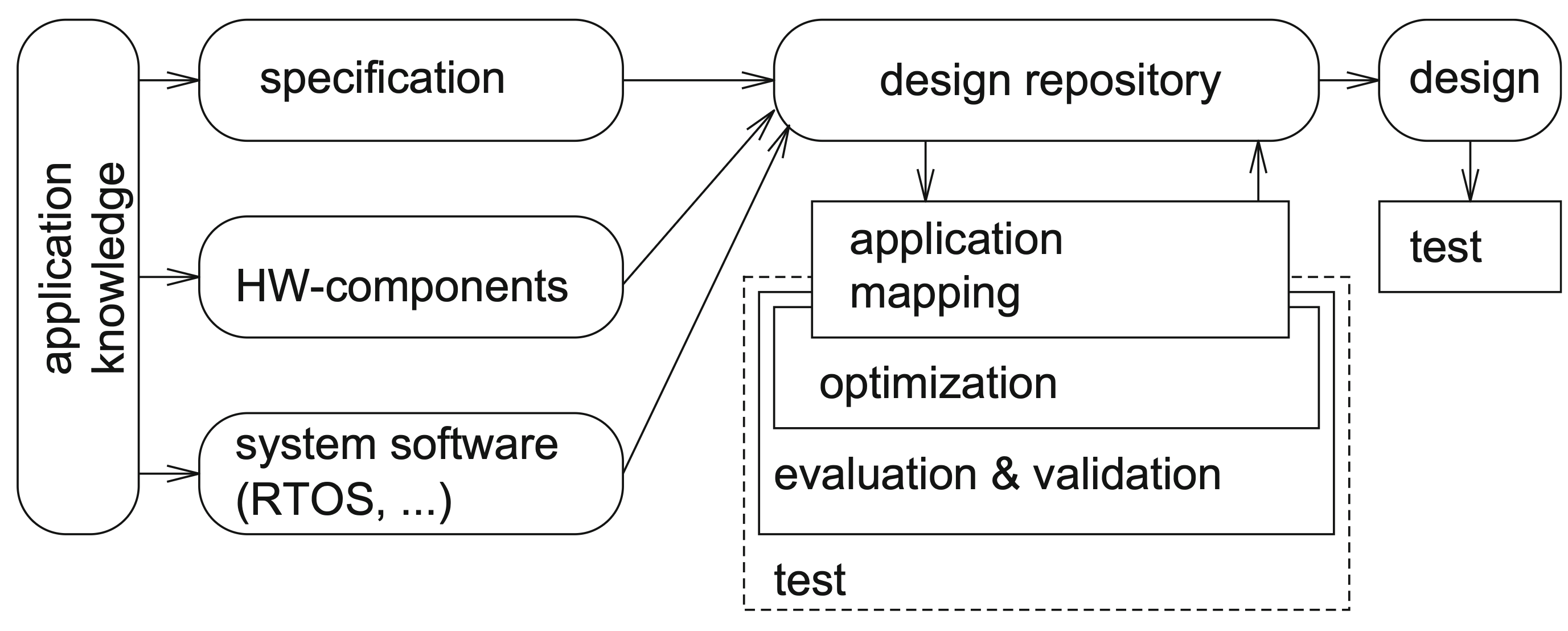
What the Flow Says
- Capture application knowledge as a specification
- Reuse hardware and system software components
- Keep design information in a repository
- Iterate mapping, optimization, evaluation, validation, and testing
Design Flow Diagrams
V-Model
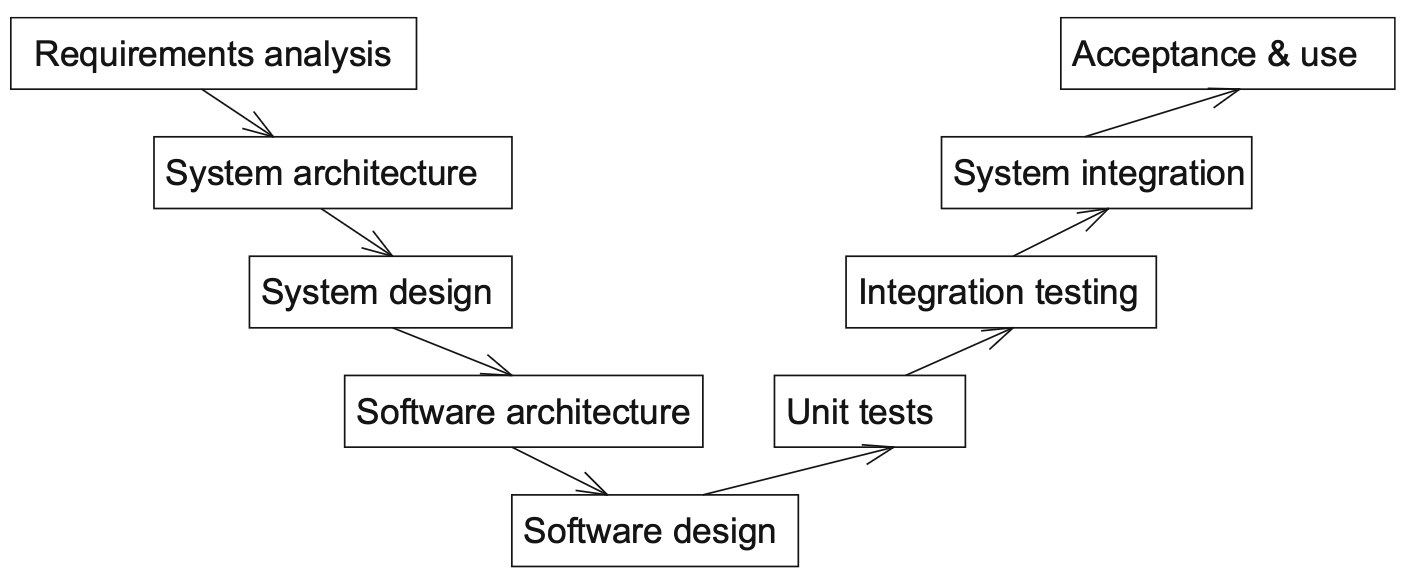
- Reads development as phases with matching validation activities
- Links early decisions to later tests
Y-Chart
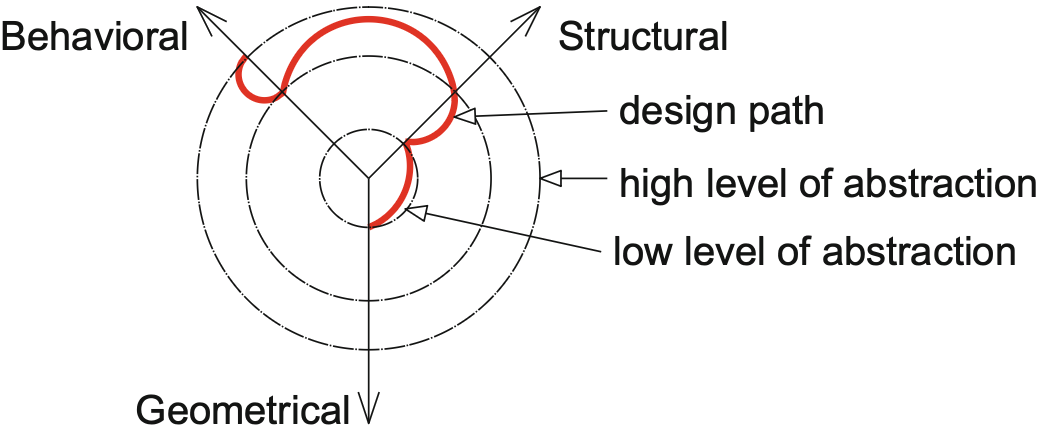
- Reads design as movement between behavior, structure, and geometry
- Shows refinement from abstract models to concrete implementations
Use both views: the V-model links design steps to evidence. The Y-chart links system views across abstraction levels.
Generic Development Paradigm
The same generic idea appears here: start from a specification and reusable components, then iterate mapping, optimization, evaluation, validation, and testing.